Plate Rolling Safety Risks to Know in Florence
Plate rolling carries four main hazards: crushing weight, pinch points at the rolls, sudden springback when pressure releases, and unsafe lifting of heavy plate. Lawhon Welding & Fabrication in Florence handles plate rolling with trained operators and proper rigging every time.
Published
Part of our Plate Rolling service.
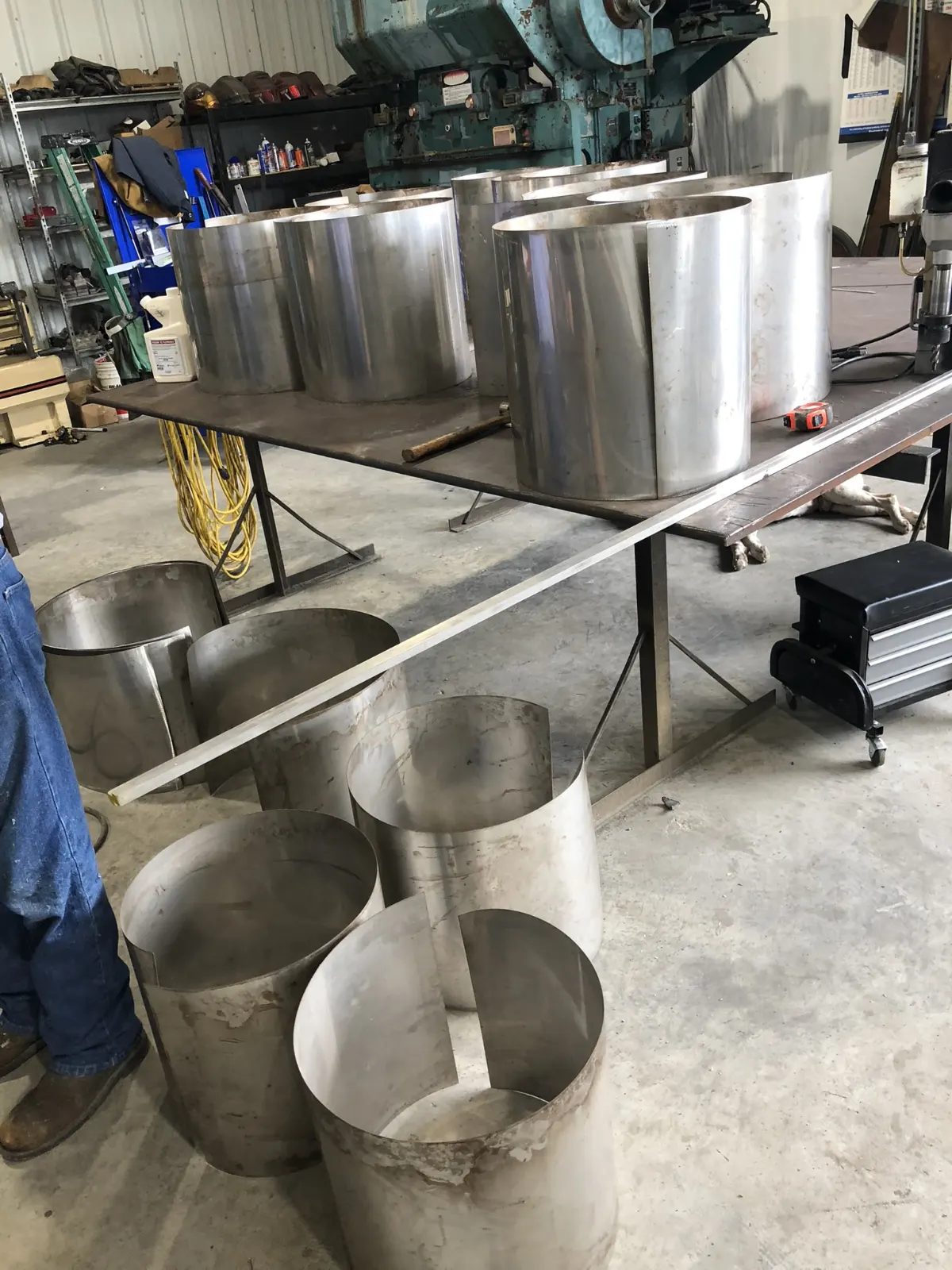
Why Plate Rolling Is One of the Shop's Riskiest Jobs
A plate rolling machine bends steel plate into cylinders, cones, and curved sections under thousands of pounds of force. That force is the whole point of the job, and it is also the danger. A plate can weigh several hundred pounds before it is ever rolled, and once it starts moving through the rolls, there is no stopping it with your hands.
Most injuries in plate rolling come from complacency rather than unfamiliarity. An operator who has rolled a hundred plates starts skipping steps: no gloves check, no look at the plate position, no confirmation the helper is clear. That is when a hand gets pulled toward a rotating roll or a plate slips off its support.
At Lawhon Welding & Fabrication in Florence, plate rolling is done by people who have run these machines for years, with the shop floor kept clear and every lift planned before the machine starts. If you have a rolled part in mind, our plate rolling service page explains the full process.
Crushing Hazards From Heavy Plate and Rolled Shells
The single biggest risk in plate rolling is crushing. A quarter-inch A36 mild steel plate four feet wide can weigh well over two hundred pounds, and rolled cylinders are even worse because they are awkward to grip and they roll. A cylinder that tips off a support block can break a foot, a hand, or worse.
Safe shops handle this with dedicated lifting equipment: overhead cranes, chain hoists, rated slings, and steel support stands placed before the plate moves. The plate never gets lifted by hand, and rolled shells never get left standing loose on the floor. Each shell is either chocked, laid flat, or immediately moved to a rack.
This matters for buyers too. If you bring in your own material for rolling, tell the shop the thickness and size up front so they can plan the lift. If a shop says they can roll your plate but has no crane or rigging to handle it, that is a warning sign worth taking seriously.
Pinch Points and Rotating Rolls
Plate rolling machines create pinch points at every contact line between the plate and the rolls. As the plate feeds through, anything loose gets pulled in with it: a glove cuff, a rag, a loose sleeve, or a hand reaching to guide the edge. Once a roller grips material, it does not let go.
Good practice keeps hands well behind the feed line and uses the machine's controls to adjust plate position instead of fingers. Gloves are a tricky topic in rolling; a heavy leather glove protects against sharp edges, but a loose cuff near a rotating roll is a trap. Operators who work around turning rolls wear fitted gloves and keep sleeves down and snug.
Emergency stops matter as well. Every operator should know exactly where the stop is without looking, because in a pinch-point event there is no time to search for it. Before hiring a shop, it is fair to ask how their rolling crew handles feeding and positioning, and a confident shop will answer plainly.
Springback and Stored Energy in Bent Plate
Steel is elastic. When a roll bends a plate, the plate pushes back the moment pressure eases, and that push can be sharp and sudden. This is springback, and it catches people in two ways: a plate end that whips up when the top roll releases, and a partially formed shell that snaps open when clamps come off.
Experienced operators account for springback by overbending slightly, knowing how much a given thickness and grade will relax, and by releasing pressure in controlled steps rather than dumping it all at once. The ends of a plate deserve special respect, since a released edge under tension can cut like a saw blade.
Rolled cylinders also hold stress after forming. Welding the seam, which is the usual next step for tanks and pipe sections, changes that stress again and can shift the shape if distortion control is sloppy. This is one reason rolled parts are best handled by a shop that rolls and welds under one roof, like we do here in Florence.
Edge Hazards, Slivers, and Handling Damage
Freshly cut plate has edges like knives. Plasma cutting and shearing leave burrs and slivers, and handling a plate to load it into the rolls means gripping those edges repeatedly. Cut-resistant gloves, sleeve protection, and deliberate hand placement are not optional on a rolling job; a single careless grab across an edge opens a deep laceration.
Slivers are the sneaky hazard. They break off during bending and end up in gloves, on the floor, and in hands. Clean-up as you go matters, and so does a final grind on any edge that people will keep touching after the part leaves the shop.
There is also the handling risk of long plates. A ten-foot plate carried by two people without a plan will swing, sag, and pinch whoever is at the worse end. In our shop, long material moves by crane or by roller conveyors, not by muscle. If a fabrication drawing calls for a rolled section with sharp edges left on, ask for edges broken before delivery; it costs little and saves bandages.
When Plate Rolling Needs a Professional Shop
Some rolling work is genuinely a do-it-yourself candidate: light-gauge flashing, thin strap, small brackets bent in a hand roller. Once you are into structural plate, the calculus changes fast. Plate thicker than about a quarter inch, plates over roughly four feet wide, and anything that needs tight cylindrical tolerance all demand powered rolls, real rigging, and an operator who has done it hundreds of times.
It also matters what happens after the roll. Most rolled parts need the seam welded, which brings in filler selection, penetration, and distortion questions. A fabrication shop that rolls, fits up, tacks, and welds in one flow turns out cylinders that are round, square at the seam, and true to size. A part bounced between vendors loses accuracy at every handoff.
If you are in Florence, Darlington, Hartsville, or anywhere in the Pee Dee region and you need plate rolled into tanks, pipe sections, augers, or curved structural members, contact Lawhon Welding & Fabrication. Tell us the material, thickness, and finished size, and we will tell you exactly how we plan to roll it safely.
Ready to move forward? See our Plate Rolling service
Written by the Lawhon Welding & Fabrication team.
Plate Rolling Safety Risks to Know in Florence FAQs
What is the most dangerous part of plate rolling?
Crushing is the headline risk, both from heavy plate before it rolls and from rolled cylinders that tip or roll off supports. Pinch points at the rotating rolls run a close second. Both hazards are controlled with cranes, rigging, support stands, and disciplined hand placement, which is why plate rolling belongs in a equipped shop with experienced operators.
What is springback in plate rolling?
Springback is the elastic rebound of steel after the rolls release pressure. A bent plate pushes back toward its original shape, which can make an edge whip up or a partially formed shell snap open. Experienced operators overbend slightly to compensate and release pressure in controlled steps so the stored energy bleeds off predictably.
Can I bring my own steel plate to be rolled?
Usually, yes, as long as you know the material grade, thickness, and dimensions. The shop needs those details to plan the lift, set the rolls, and account for springback. Bring clean plate with edges that are safe to handle, or ask the shop to grind or break the edges before rolling. Call Lawhon Welding & Fabrication in Florence with your material specs and finished size.
What thickness of plate can be rolled?
It depends on the machine capacity, the plate width, the material grade, and the finished diameter, since thicker and stronger material needs more force to bend. Light gauge bends easily, while thick structural plate takes heavy powered rolls. Give Lawhon Welding & Fabrication a call at the number on our site with your thickness and part size, and we will confirm what we can roll.
Still have questions? Contact Us